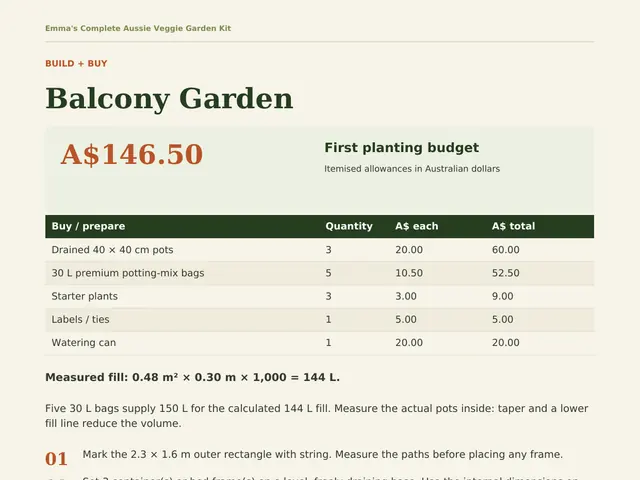
1 · Plan your patch
Know what fits before you buy
Choose a manageable space, check which containers suit your crops and prepare your shopping list before heading to the nursery.
Garden plans, shopping lists and the Balcony guide.

Spring planting is on now across most of southern Australia
Know what to plant in your Australian climate, what to buy for your space, and what to do next — whether you’re starting fresh or giving it another go.

One-off payment · Instant download · 30-day money-back guarantee
You want to grow something, but you’re unsure what to plant, what to buy and where to begin.
You’ve had seedlings struggle, disappointing harvests or pests arrive just as things were looking good.
Start with your conditions, choose a manageable space and follow the next practical step.
Try it now
Pick your town and a month. You’ll see your climate profile and some crops you could start, taken from the kit’s calendars.
Your climate profile is a starting point. Use the local notes to adjust for frost, heat, sun and exposure.
Opens secure checkout · One-off payment · Instant download
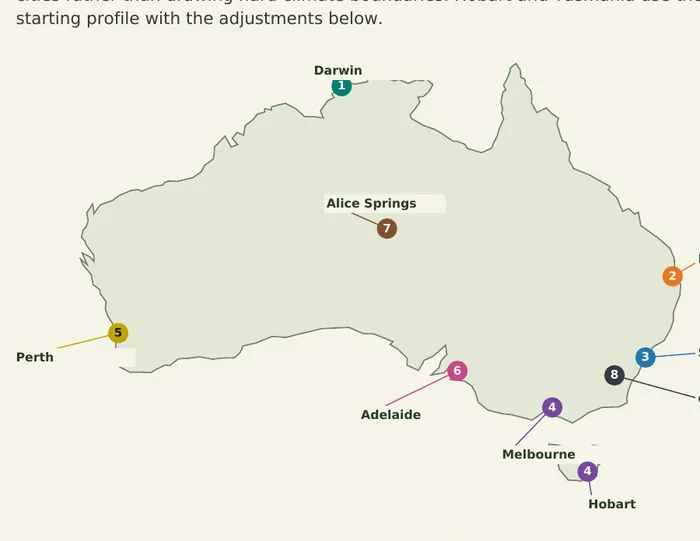
The Climate Zone Guide covers 56 towns and regions. Hobart and Tasmania use the Melbourne profile, with spring crops 2–4 weeks later and autumn crops 2–4 weeks earlier.
Start small, follow a clear plan, and find the next step when you need it.
1 · Plan your patch
Choose a manageable space, check which containers suit your crops and prepare your shopping list before heading to the nursery.
Garden plans, shopping lists and the Balcony guide.
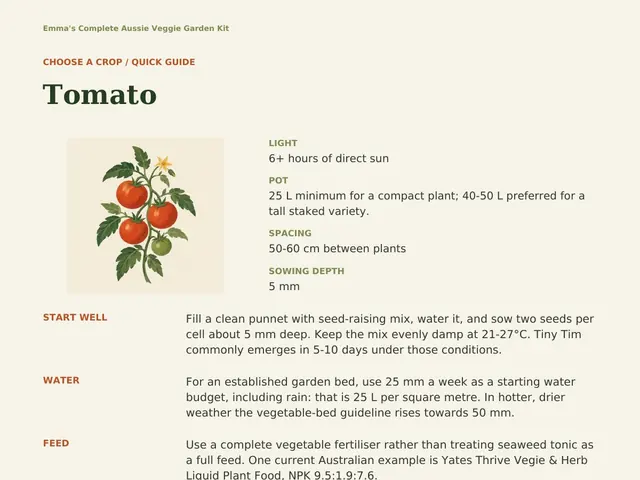
2 · Grow with clear steps
From sowing depth to watering and picking, find the instructions for the crop you’re growing — without piecing together advice from different places.
Detailed crop guides and practical planting instructions.
3 · Spot problems early
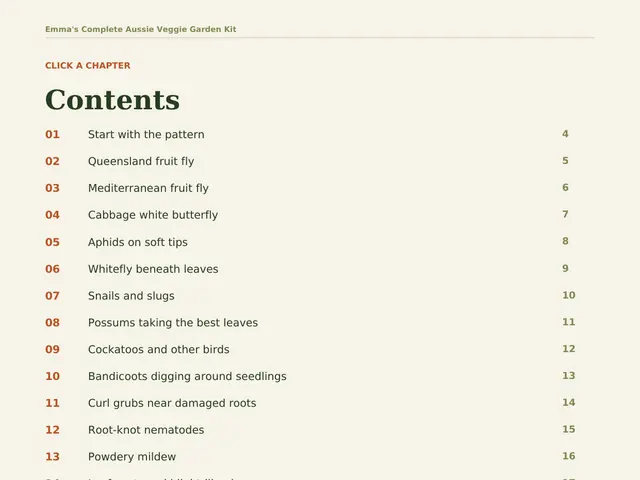
Something eating your leaves or affecting your plants? Compare common symptoms with the photos, find out what to check and explore practical next steps.
The illustrated Vegetable Problem Solver.
Real pages, exactly as you’ll download them. Tap a page to enlarge it.
Measure your space, choose containers and make a shopping list: 10–15 L for a lettuce or herb, 40–50 L for a tall tomato.
Main guide, Six Garden Sizes, Shopping ListsCheck the window for your climate, then sowing depth, spacing and how to plant out.
Monthly guides, crop guidesWater by the root zone, feed to the crop’s stage and know what to look at each week.
Crop guides, Heat & Water guide, 52-week plannerCompare symptoms, learn what to check and choose a practical next step.
Vegetable Problem Solver, Common Mistakes guideKnow when it’s ready, cook something simple and store the surplus.
Harvest, Cook & Store (30 recipes)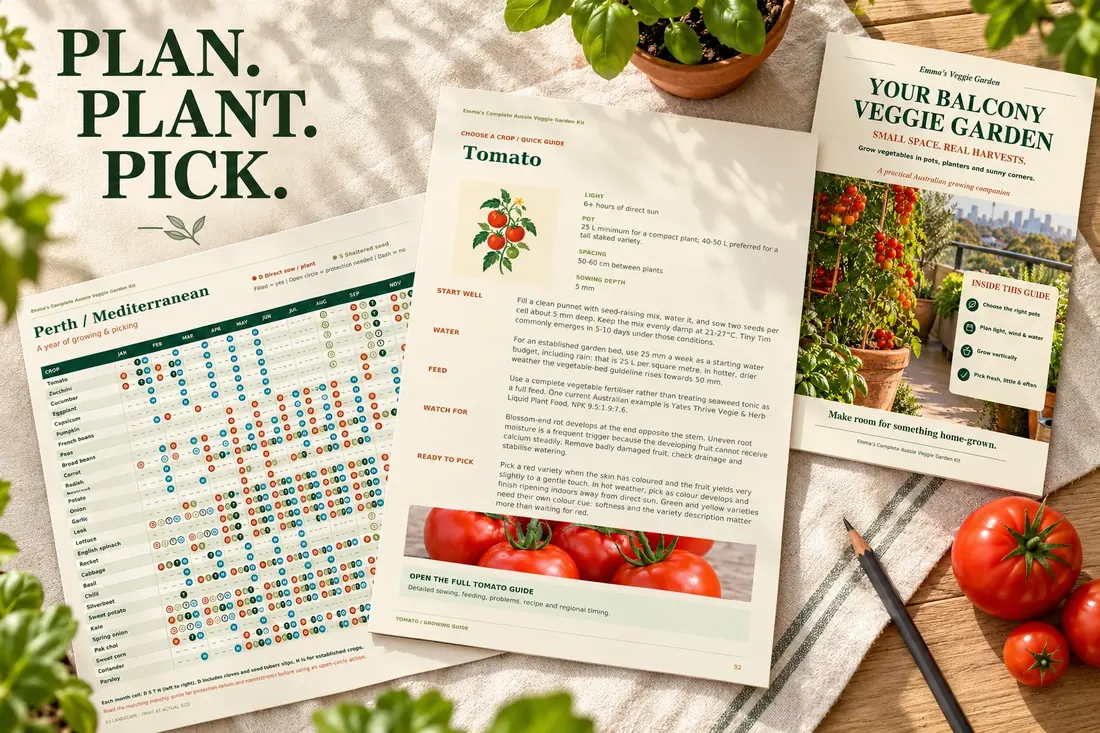
Why pay when there’s free advice online?
There’s plenty of useful free gardening advice. This kit brings the planning together: your climate, your growing space, your crops and the next practical steps.
Start with the pages you need now, then return to the rest as your garden grows.
Use the illustrated Problem Solver to compare common symptoms, learn what to check and explore practical prevention and control options.
For example:
A reference guide to help you compare symptoms and choose what to check next. It isn’t a personal diagnosis service.
You don’t need to read everything, print everything or use the optional spreadsheets to begin.
After payment, a download button appears and the same link arrives by email. It’s one ZIP folder, about 75 MB.
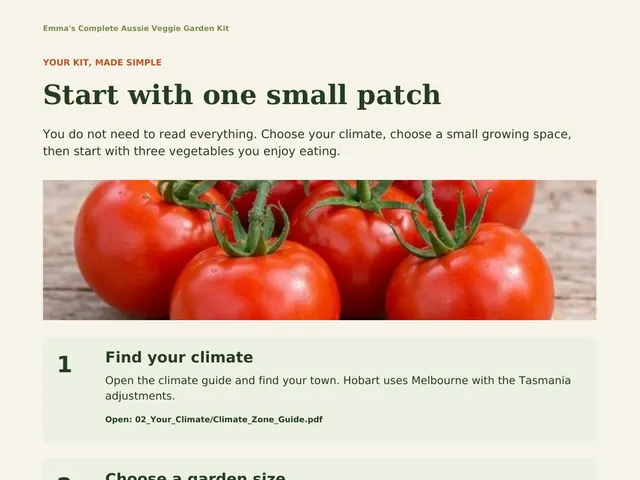
Five short pages tell you what to open first and in what order.
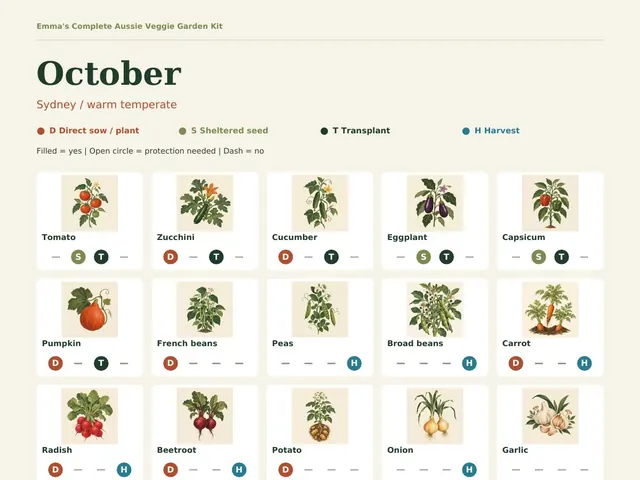
Open your town’s monthly guide, pick a few crops marked to sow or plant out, then follow the First Seven Days plan: one small job a day.
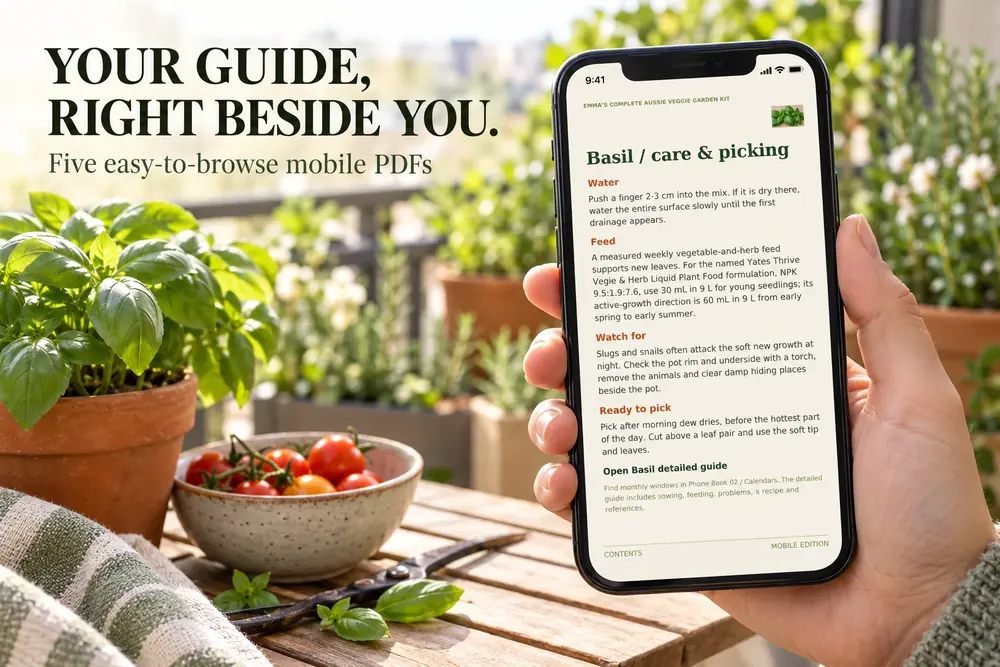
Phone-friendly PDFs. Five phone-sized PDFs are included, so you can read the guides in the garden or at the nursery.
Optional offline app. It runs in a web browser on a computer. Some phone file viewers can’t open it, so use the phone PDFs there.
Digital guides and tools, grouped by what you need to do.
START HERE, First Seven Days and a 30-day starter plan.
A climate guide for 56 towns, monthly guides for 8 climates and wall calendars.
30 crops, each with a one-page summary and a detailed guide.
Balcony to 40 m², themed plans and costed lists, plus the Balcony guide.
The Problem Solver, a Heat & Water guide and a Common Mistakes guide.
30 recipes, storage tips, a 52-week planner, a fillable journal and labels.
5 phone PDFs, monthly wallpapers, an offline app and 2 spreadsheets.
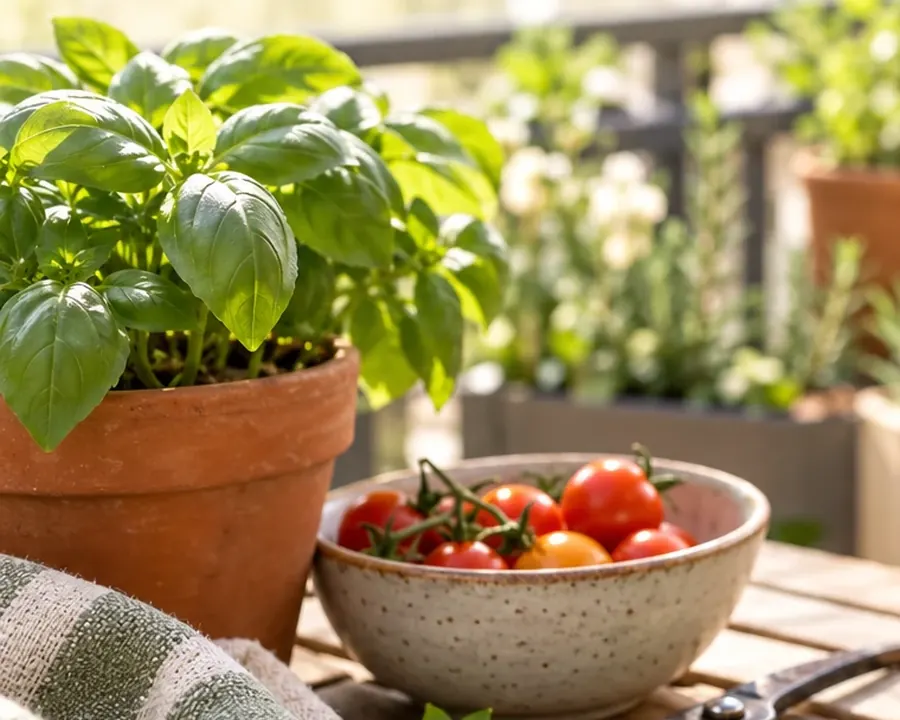
A handful of herbs for dinner. Salad leaves picked just before lunch. Your first ripe tomato.
Start with something small that you’ll enjoy growing — and eating.
Emma’s Complete Aussie Veggie Garden Kit
For Australians starting a small food garden — or giving it another go — in pots, on a balcony or in a backyard bed.
inc. GST · one-off payment
Digital guides and tools. Read on screen or print at home. No physical products are shipped.
One-off payment · Instant download · 30-day money-back guarantee
If the kit isn’t right for you within 30 days, contact us for a full refund. This is in addition to your rights under the Australian Consumer Law.
Yes. Open START_HERE.pdf: five pages that take you from your climate to a garden size and your first crops. The First Seven Days guide then gives you one small job a day.
It gives you a structured way to look again: the planting window for your climate, the pot and soil guidance, the care steps for each crop, and the Problem Solver and Common Mistakes guide for what to check before you replant.
Eight climate profiles: Darwin, Brisbane, Sydney, Melbourne, Perth, Adelaide, Alice Springs and Canberra. The Climate Zone Guide matches 56 towns and regions to a profile, with four questions for any other site. Profiles are a starting point: local frost, heat, sun and exposure still matter.
Yes. Hobart and Tasmania use the Melbourne profile, with spring warm-season crops 2–4 weeks later and autumn crops 2–4 weeks earlier. Check soil warmth and the local frost forecast before planting.
Yes. The Balcony guide covers light, containers, weight, wind and watering, and there’s a measured balcony plan with its shopping list. Not every crop suits every balcony: the guide helps you choose by light and space.
Yes. The Vegetable Problem Solver covers 16 common problems, most with photographs, with what to check and practical prevention and control options. It’s a reference guide, not a personal diagnosis service.
There’s plenty of useful free advice. This kit brings the planning together for Australian conditions: your climate, your space, your crops and the next practical steps, in one organised place you can come back to.
No. Start on screen with START_HERE.pdf and print only the pages you need. Most pages are A4; the wall calendars are A3, and there’s an A4 calendar book too.
Yes. Five phone-sized PDFs and monthly phone wallpapers are included. The optional offline app runs in a web browser; some phone file viewers can’t open it, so use the phone PDFs there.
On a computer, choose Extract All (Windows) or double-click the file (Mac), then open the folder. On a phone, open the ZIP in your Files app and tap it to unzip. Keep the folders together so the links between guides work.
No. This is a digital kit of guides and tools. Nothing is posted. The plans and shopping lists help you buy what you need locally.
Your download link works for 30 days and 5 downloads, so save the ZIP straight away. If the kit isn’t right for you within 30 days, use our contact page for a full refund, no questions asked. Your rights under the Australian Consumer Law apply as well.
Get a free 7-page sample of real pages from the kit, and judge the layout and instructions for yourself: